Awareness isn’t enough. What matters is what your employees do.
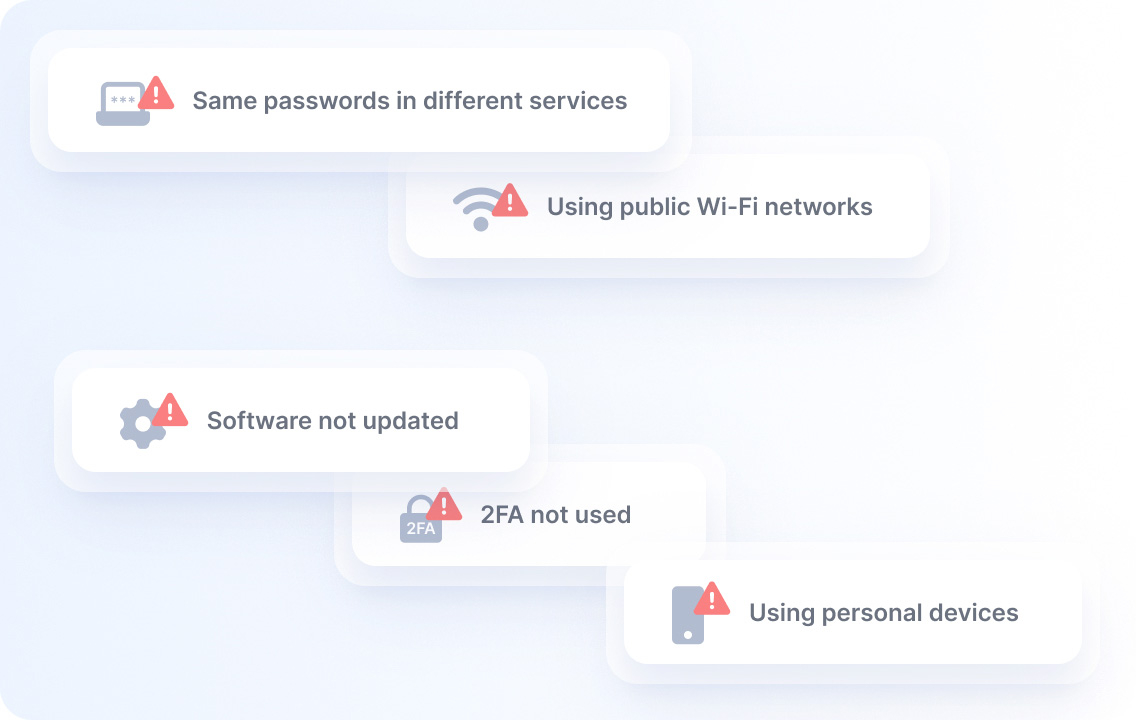
Focus on real risks
We focus on real cyber risks your employees face every day, so the training always feels relevant. Each topic is clear, practical, and designed to help people make safer decisions at work.
Bite-size modules
Training is delivered in short, easy modules that fit into busy schedules without overwhelming learners. This makes it easier to stay consistent and keep cybersecurity knowledge fresh over time.
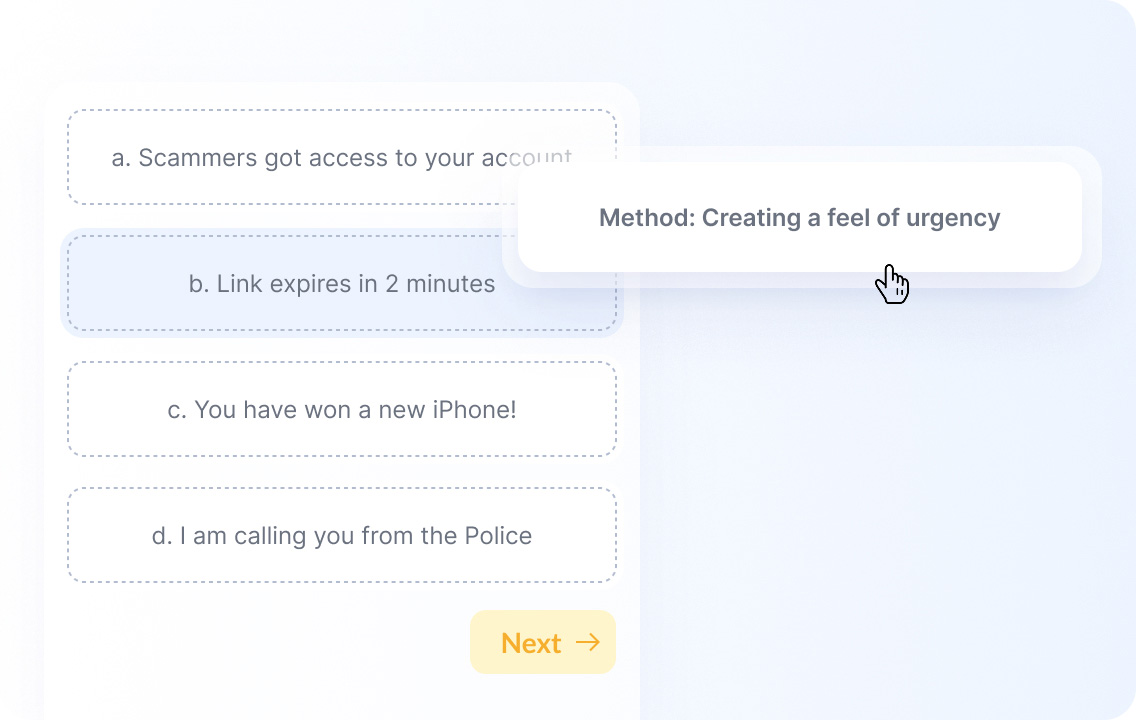
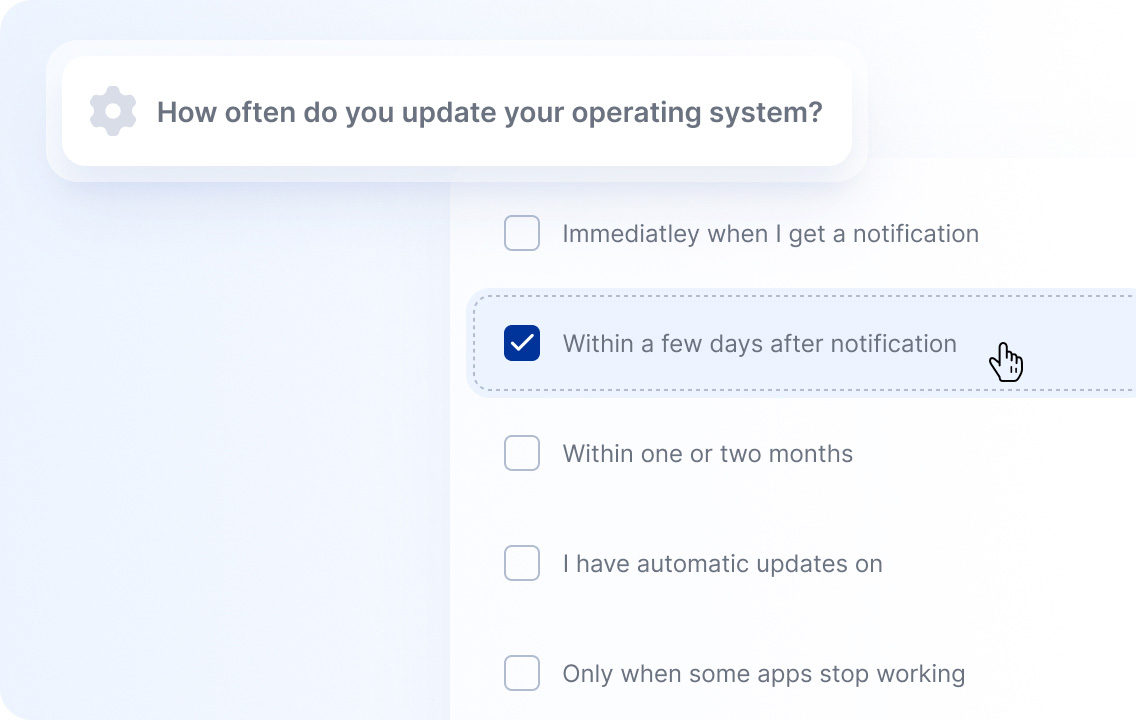
Practical lessons
Each lesson presents realistic situations with clear actions employees can take right away. Decision trees and previous answers adapt the guidance, so every employee gets information that is relevant to them.
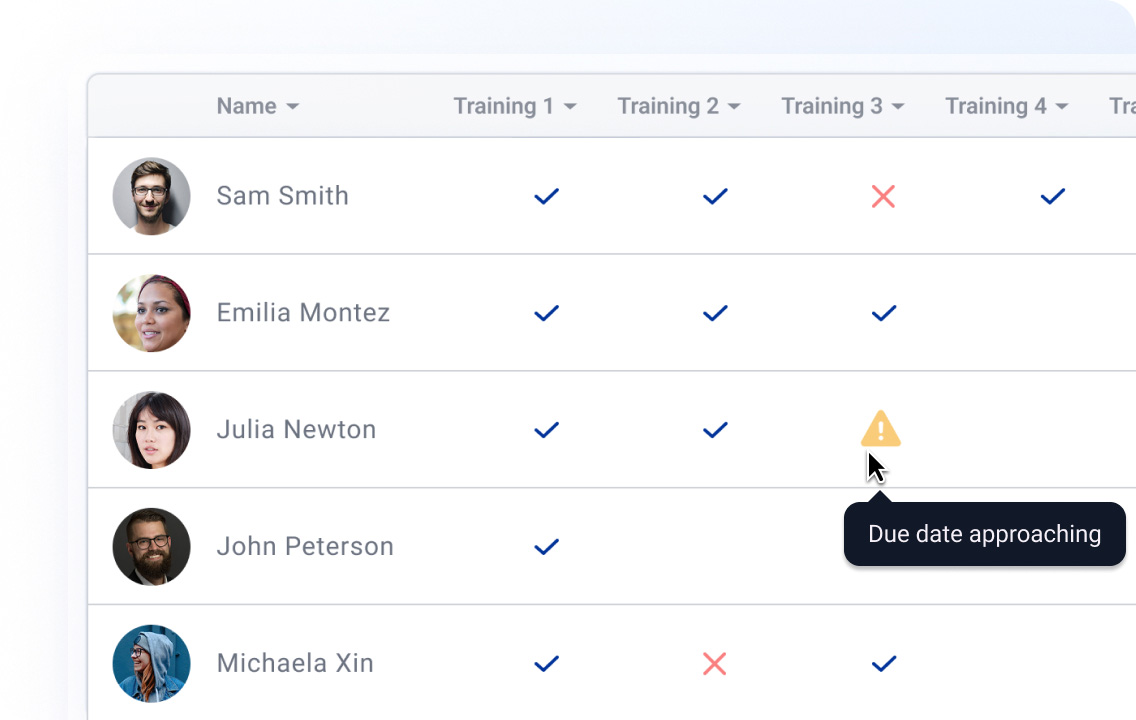
Creating transparancy
You can easily track progress, completion, and risk levels across your organization. Clear insights help you understand what’s working and where your team needs more support.
What users say about our trainings
“All of your training courses have been explained clearly and simply. Even the most difficult topics have been easy to understand.”
🇪🇪 From Estonia
“I finally realized that I should never postpone updates and should update the software as soon as the notification appears.”
🇱🇻 From Latvia
“Repetition is the mother of wisdom. These training courses remind us what to pay attention to and help keep the topic in focus.”
🇵🇱 From Poland
“I learned about the risks associated with using language models and how to avoid them.”
🇪🇪 From Estonia
“Phishbite’s training courses are excellent. Keep up the great work!“
🇪🇪 From Estonia
“I hadn’t thought about the risks of public Wi-Fi before. It’s important to raise awareness of them.”
🇪🇪 From Estonia
Topics covered on phishing courses
Our testing provides transparency into real threats and employee behavior.
Using mobile devices
Introduction and the importance of security awareness
Identifying phishing attacks based on the sender’s address
Different methods used in phishing attacks
Secure password management and 2FA
Secure office
Social media and cybersecurity
Using secure networks
Updating software
Ransomware attacks and data backup
Protection of personal data
Safe use of language models
Common scams
Reduce your phishing related human risks with Phishbite before it’s too late